WRITING RECESS

April 11th, 2014

Next week I get to start a series of Writing Workshops with a group of fourth graders at Maplewood Elementary in Edmonds. The kids are giving up their lunch recesses to take part. I hope they end up writing like they play out on the playground – with fun and abandon.writex2677

This week, I am gathering ideas for writing games, exercises and prompts. Here are some possibilities:

1. ROUND ROBIN WRITING. This emphasizes the basic form of any story: beginning, middle, end. Using a prompt, (I think I’ll go with “I used to live in a palace…”), kids have six minutes to write a beginning to a story. Then we trade papers and take six more minutes to write middles that fit the beginnings received. Then shift again and on to endings. We finish up by reading our creations, an important part of all writing shenanigans.

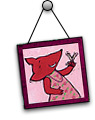
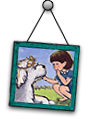
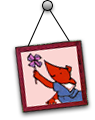
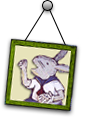
2. PICTURE THIS. I have a pile of photos that evoke story. Each kid can choose one as a starting place and see where the story goes.

writex4679

3 and 4. COULD WE LIVE HERE? Two sessions. First session, as a group we will create a setting, voting as necessary to narrow things down. Then we’ll brainstorm a list of characters who might live in this place.

In the second session, each kid chooses one of these characters to write into a story in that place.  This is a suggestion from Cassie Cross who teaches at Bellevue College. I wonder if it will work as well with fourth graders as college students?

writex16765. MAPMAKING. Each student maps a place that is special to him or her – neighborhood, house, room, school playground, backyard, grandma’s house – and labels it with stories that happened there, or could happen there.

6. YEAR BY YEAR.  I will ask the kids to think of their childhoods year by year and write a memorable event for each year, noting that memories juicy with emotion hold the most story. Then we’ll choose memories as story jumping-off places. I am curious to see what these ten-year olds remember about their childhoods.

writex3678

7. BEGIN WITH MUSIC. Five-minute timed writings to music. For instance, I’ll play a Bach cello concerto for five minutes and the kids can write the story that is suggested. Then I’ll play a penny whistle jig and they’ll start a new story. I remember using this exercise with the wonderful Lillie Rainwater’s fourth/fifth graders at Hawthorne Elementary in Seattle. Ms. Rainwater advised the kids to think of leaping into a story like jumping into double Dutch twirling ropes. Catch the rhythm of the music, she told them, and jump in with words.

That takes us back to the playground. And recess!

Thanks to Paul Borchert, librarian at Maplewood, for helping this Writing Workshop idea come to fruition. And thanks to any of our BATT Blog readers who add to this list of writing prompts, games and exercises in the comments.

Note: photos to illustrate this post are from those I will use for exercise two.

Families that Sing Together Ring Together

January 21st, 2014

On January 14, I contributed this guest blogpost to my friend (and writer) Dia Calhoun’s blog, 7:30 Bells. The intent of Dia’s blog is to capture times of inspiration.


Nothing rings more bells than the collaborative fun of inventive play.As we prepared for a big family holiday dinner, I found a list of clues to Christmas song titles, tucked into a book of carols. I thought the list might be the basis of a game and brought it to the table that night.We divided into three teams. Each team gave itself a name. Then, in turn, they guessed the names of the songs as suggested by the clues. (For example, “Bleached Yule,” is the clue for “White Christmas.”) We decided to allow ten seconds to guess then moved along to next team.Of course my singing family not only named, but started to sing the songs as well. We decided to give extra points for singing. The Reindeer Games team laid in harmonies. More points. The Silver Bells featured a solo. More points. The Unwrappers added choreography. What a show. We had lots of laughs as the competition heated up. We invented how the game worked as we went along.I love my time alone in the flow zone, writing and illustrating. But what an added joy to create and play with my family.

Here’s the list, which I see is available several places on the internet.

Material for your own family’s creative play:
1. Bleached Yule
2. Castaneous-colored Seed Vesicated in a Conflagration
3. Singular Yearning for the Twin Anterior Incisors
4. Righteous Darkness
5. Arrival Time: 2400 hrs – Weather: Cloudless
6. Loyal Followers Advance
7. Far Off in a Feeder
8. Array the Corridor
9. Bantam Male Percussionist
10. Monarchial Triad
11. Nocturnal Noiselessness
12. Jehovah Deactivate Blithe Chevaliers
13. Red Man En Route to Borough
14. Frozen Precipitation Commence
15. Proceed and Enlighten on the Pinnacle
16. The Quadruped with the Vermillion Probiscis
17. Query Regarding Identity of Descendant
18. Delight for this Planet
19. Give Attention to the Melodious Celestial Beings
20. The Dozen Festive 24 Hour Intervals

Thank you, Dia, for the opportunity to add to the tintinnabulation of your 7:30 Bells Blog.


Magic Formula: How to Create a Picture Book

January 21st, 2014

(from BooksAroundTheTable, our crit group blog)

This time up, I considered writing an advice column about what to do when you’re waiting for an editor’s response. But then I decided it’s more interesting to look at the work itself: making books. Over my next few blogposts, I plan to lay out a process for creating a picture book, using examples from my published and as-yet unpublished work.

PART ONE: CHARACTER.

Good stories need intriguing characters, characters that sparkle with their very own inward and outward expressions of self: looks, mannerisms, substance, personality quirks and out-of-balanced-ness.

franksketches

Rough sketches for Frank of “Frank and Izzy Set Sail,” exploring gesture.

My characters are usually an amalgam of people I know, their traits exaggerated and edited for maximum dramatic impact. I am especially interested in duos, for the interaction and conflict possibilities. Also, I think it’s easier to draw animals than people.

ct27

Thumbnail sketch of Frank and Izzy.

So, Dear Reader, if you want to play along, start by drawing a favorite animal. You can anthropomorphize a little or a lot. Look through family movies and photos for lively gestures and expressions and try to transfer what you see to your animal. Notice how other illustrators do this. (Paul Schmid, Arnold Lobel, James Marshall to name a few.) Hilary Knight’s Eloiseillustrations are great inspiration for childsize action gestures. Another strategy is to google photos of famous duos, (i.e. Lucy and Ethel, George and Gracie Burns, Sonny and Cher…), and try to capture their interaction in your characters.

lucy.ethelmice660

Rough sketches for future characters based on Ethel and Lucy.

I like to do these sketches on tracing paper. It’s easy to erase and rework. Once I have several pages, I hang them on the wall to consider. I think about proportions. Heads to bodies to legs and arms. Do this and pretty soon you’ll have a rough, generalized look for your characters.

Z&Iproportion

Rough sketches of Zelda and Ivy, finding proportions.

It’s impossible to draw pages of the same characters without starting to sense story bubbling up. Sometimes these ideas come out of “mistakes” in the drawing. For example, maybe the line you’ve drawn for a smile gives the character a devious look. Go with it. Think about what that character is up to. Your mind will start spinning story.

Meanwhile, life goes on. Pay attention. Note overheard conversations that sound like your characters. Keep track of situations that provoke an emotional response in your own life, the funny, scary, sad, annoying, angering stuff. Write down anything that seems made for these little characters you are brewing.

My next turn to blog here will be Feb. 7. Using these preliminary drawings and notes, we’ll move toward constructing the story.


Bio | Books | Programs | Journal | Fun & Games | Contact | Home
Copyright © Laura McGee Kvasnosky 2008-Present